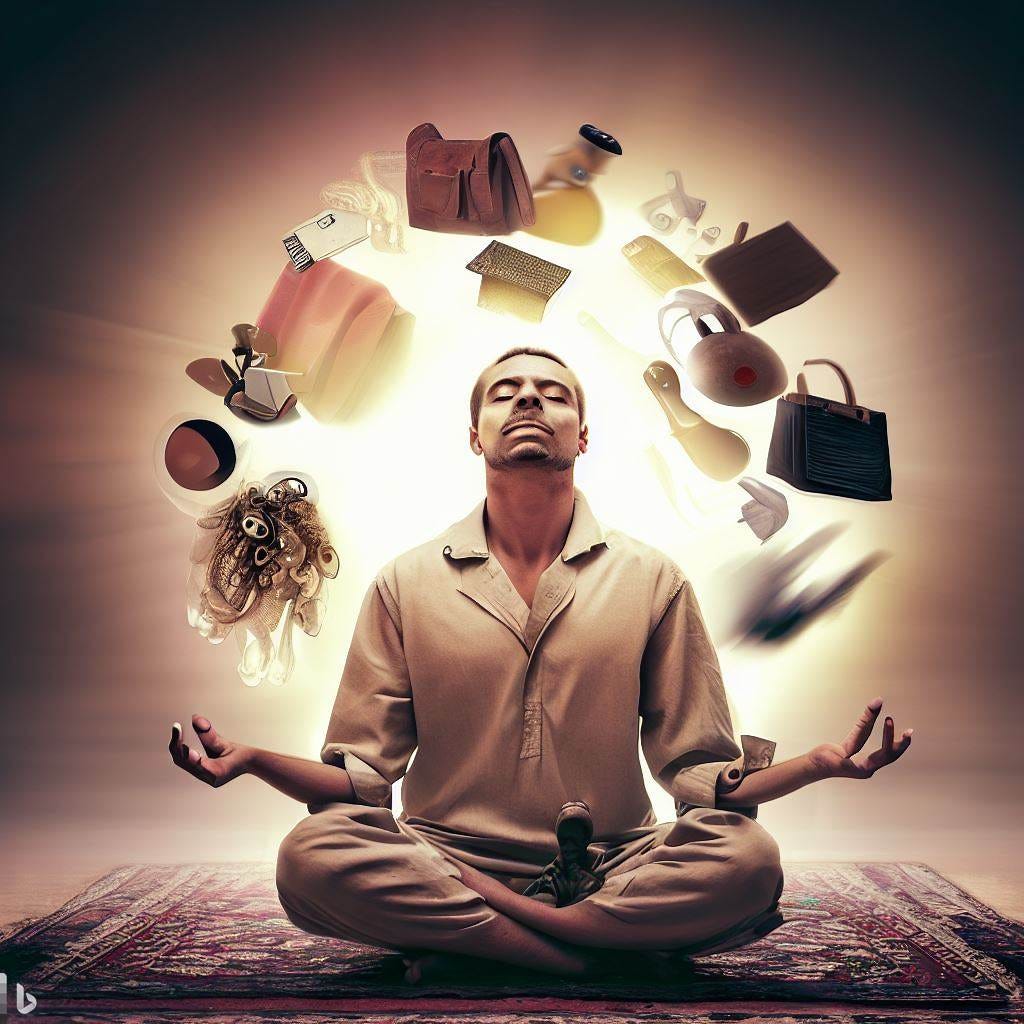
You can’t hold on to so many things at once. Time, energy, and space are limited. If I want to watch a movie, I can not write a blog at the same time. All of us have dropped so many things in our lives. We used to love playing Bat-ball and Ludo with our friends in childhood, but as we grew, we dropped them and devoted more time to studies. We used to enjoy oily food, but as we aged, we switched to healthier alternatives. We moved on from that first crush in school. We left that first job and moved on to the second and the third.
Yet a common thread ran through it all. We wanted to become better. We left the previous job for a better one, spent time with friends to do well in our studies, ate oily food for our health, and so on. We did something, realised there was a better alternative, and dropped the first. That’s what any growth-oriented person does in life. We choose growth over instincts. It’s not easy to leave the tasty food, the friends, or that crush, but that’s what we do, and what we tell our children to do. Whenever instincts and reason conflict, we ask them to choose reason.
But how does reason or logic decide what’s good or bad? Why is it better to leave friends for studies? Why is it better to eat healthy food? Why is it good to change jobs or leave that crush? Logic develops priorities. Being healthy is a priority over taste. Earning money is more important than staying in a comfortable ecosystem. Basically, we build this life framework in childhood and keep refining it as we grow. But a crucial question is: do we examine and review the fundamentals of this life framework? What is the ultimate purpose? To be happy? If so, have we found happiness in money? Do we ever ask this question honestly? That’s too much to do because it shakes the entire foundation, and it makes us very uncomfortable. So we decide to defer this enquiry and move on, but the right time never comes in our lives because there are always more urgent things to handle.
Also, it’s not easy to let go of what we get for free. However, it is comparatively easier to let go of things we work hard for. If we have to work hard at the office to get a promotion, we will weigh whether it’s worth the effort. The moment we realise that the same hard work can get us something better, we stop working for the promotion. Thus, to break free of life’s fixed frame, two fundamental requirements apply. First, we need the leisure to review and examine. Second, we should have earned what we have through hard work, and we should be confident that, with the same effort, we can do something else too. Wisdom and hard work together help us break free of fixed frameworks.
When we grow wise enough to examine and realise that money will never actually make us happy, and at the same time dare to work hard to search for the true meaning of happiness, we break free of a life framework centred on money. When we grow wise enough to realise that mindless socialisation, shopping, eating, wanderlust, and social media are nothing but escapes, and we have the capacity and willingness to work hard to search for real happiness, we break free of the framework of life centred around pleasure. When we grow wise enough to realise that proving ourselves to be the best at work and gathering all the awards, medals, and trophies is just an outcome of a mental story of being weak and vulnerable and seeking social validation to overcome that fear, and we are willing to work hard to understand the source of this fear and work thereon, we break free of the framework of life centred around fear and insecurity.

Leave a Reply