While being on Earth, we can’t escape gravity. It’s everywhere. Whatever we do and wherever we go, gravity exists. Similarly, while being in this body, it’s impossible to escape ego. Whether an ordinary man or a rishi, everyone is under ego’s influence. Not so that ego is like a vestigial organ like the tail in the human body, which has no use. Rather, ego has a very important function. If you remove the ego, we will be in a vegetative state. Somebody hurts us or tries to kill us, and we will not respond to that. We will not try to save ourselves.
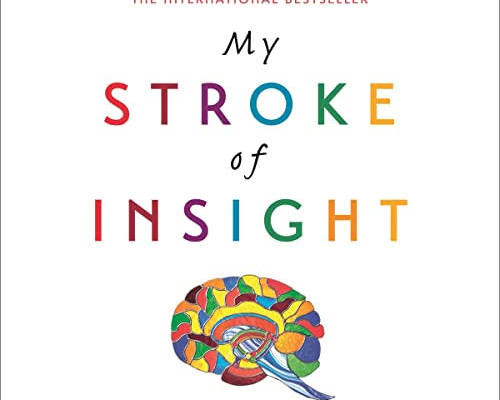
In fact, I recall the book written by Jill Bolte Taylor, “My Stroke of Insight”. She is a neuroscientist and suffered a stroke. Due to the attack, she lost connection with the left brain and feels boundarylessness and oneness with the surroundings. She has beautifully explained this feeling in the following TED Talk:
It’s amazing to see a neuroscientist explaining this feeling, which she experienced herself. That feeling of being egoless or merging with the surroundings is actually a stroke or disease because, when we interact with the world, we need the left brain, the memory stored there, and a sense of self to function. Then what is the ego-lessness we talk about? Why have all the saints and sages always talked about the ego being the biggest enemy in the spiritual journey?
I don’t think it’s about eliminating the left or right brain. It’s not about eliminating the ego. Rather, it’s all about setting the centre right. The scriptures try to explain it through the example of a chariot. The chariot is like the body, and the horses are like our emotional mind. The charioteer represents the rational mind, and the owner of the chariot represents the self. This is not to say we need to remove the horses and the charioteer from the chariot. That will render the chariot useless. Rather, the scriptures tell us to be awake and direct the charioteer. If the horses lead the chariot, it will not go anywhere. Similarly, if we let our lives be guided by the emotional mind, we will not go anywhere, because the emotional mind is directionless.
Similarly, if we let the charioteer take the chariot wherever he wants, since he does not know the purpose of the journey, he will take us somewhere based on his limited understanding of us. If we are awake, we can tell the charioteer to take us to the destination we actually want. When we are aware, the “aware self” connects us to the larger frame of life. It connects us to love, compassion, curiosity, and creativity. When the right brain takes command, it guides the rational and emotional brain.
Ego is the sum total of the memories of different experiences we have had so far, our belief system, biases, and self-image. It’s required for us to exist in this world. We need that identity and memory when we go to the office, negotiate with the vegetable vendor, or talk to people. We can’t make all these interactions in a state of boundarilessness. However, what matters is the locus. If the owner of the chariot is awake, the emotional and the rational mind will obey its instructions. The self will always try to connect to the larger. It will always be driven by love, compassion, and exploration. If not, the horses or the charioteer will decide the direction, and that will be quite limited because their understanding of life is very limited. Life will be driven by fear, greed, and ambitions. Egolessness does not, therefore, mean cutting off the emotional or rational brain and throwing it off; rather, it means setting the centre right. It means staying awake to take control of emotions and reason, so love and compassion guide both. Once that happens, we will not remain confined to the limited domain of pleasure and responsibilities, which are mostly based on ego. Instead, we will be driven by an urge to explore and create, guided by love.

Leave a Reply