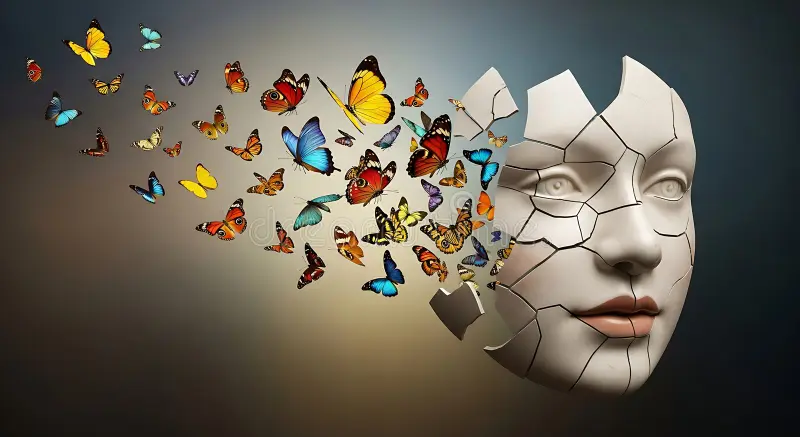
Human civilisation has experienced a wide range of emotions. We have seen instances where one brother kills the other for some property, where one countryman conspires with foreign forces against the interests of his own countrymen, where fathers sell their daughters or rape them, where people adulterate food, where people pollute the air and make their own lives a living hell, and also where people don’t shy away from putting the lives of many at risk for their petty interests. At the same time, we have also seen instances where people give up their lives to save another, where people share food while starving, and where people donate all their belongings for the well-being of society; people choose to be hanged rather than accepting the lives of slavery, and people devote their entire lives to bring a little difference in the lives of others.
All types of possibilities exist in human life. Then what decides the behaviour of a particular human being? Different streams of knowledge have different explanations. While psychology explains behaviour through conditioning and learned behaviour, neurology explains it through neural connections. Astrology may offer entirely different explanations, focusing on the strength, weakness, and connections of the planets in a person’s horoscope, as well as the sequence of dashas, antardashas, and prathantardashas.
I feel this question is very fundamental. Whatever it may be- the planets, the neural connections or the learned behaviour- we are conscious human beings, and we should always be able to change the same. Why can’t we change ourselves? Why do we have mental disorders? Why are human beings not happy? Why do they commit suicide? Why do they undergo depression?
Probably because what we are conscious of is only a small part of what we are. The moment we eat, the whole body starts participating in digestion and absorption, and blood carries the food from the intestine to different parts of the body, where cells convert it into energy. Do we feel that? Do we take part in the process? No. We don’t. This process happens involuntarily, and we are not conscious of it. Similarly, our decisions are also driven, by and large, by our unconscious mind. We don’t have access to it. How the unconscious mind decides is anybody’s guess. We listen to Satsanga, read the best books, and listen to the talks of the most profound people, but that’s very superficial. Nothing changes at the unconscious-mind level.
Likes and dislikes, rights and wrongs stored in the unconscious mind are so strong that they remain quite insulated from what happens in the conscious mind. That’s why a greedy person may get the opportunity to attend the satsang by the most realised soul, but his unconscious mind may completely isolate itself from what the saint says. That’s how we become inauthentic. We feel we are going to Satsang for spiritual realisation, while the unconscious mind treats it as just an outing and an opportunity for chit-chat. We donate because we feel it’s a very good cause, while the unconscious mind seeks validation in the form of a name carved on the temple brick. We feel we are reading the Bhagavad Gita for spirituality, but our unconscious mind actually uses the shlokas as a weapon to defeat colleagues in a debate about spirituality.
The unconscious mind is a place we know very little about. It’s like Lanka, and we hardly know where it is. But the best thing is that all of us have Lord Hanuman within us, and when we concentrate on our breath and, by closing our eyes, inspect the body’s field, we come to know what lies in the unconscious mind. We experience different sensations in different parts of the body. The leading neurologists have shed light on neural feedback. They explain how our conscious mind interacts with the unconscious through these sensations, and how the unconscious mind communicates with the conscious mind by making us feel pleasant and unpleasant sensations. Generally, when we close our eyes, we enter into a state of dreaming. We enter the domain of the unconscious mind but lose connection with the conscious mind. But when we retain awareness of the breath, observe different parts of the body and the sensations within them, and continue to sit in a witness mode, something significant happens inside us. We realise the depth of our existence. We come to know the “I”, which is far beyond the limited unconscious and conscious mind. When that “I” enters the unconscious mind, like Lord Rama entered Lanka, the whole unconscious mind undergoes a transformation. Though it’s a long process, from building a bridge with selfless deeds to getting to know the centre of Ravan’s strengths and hitting an arrow there.

Leave a Reply